


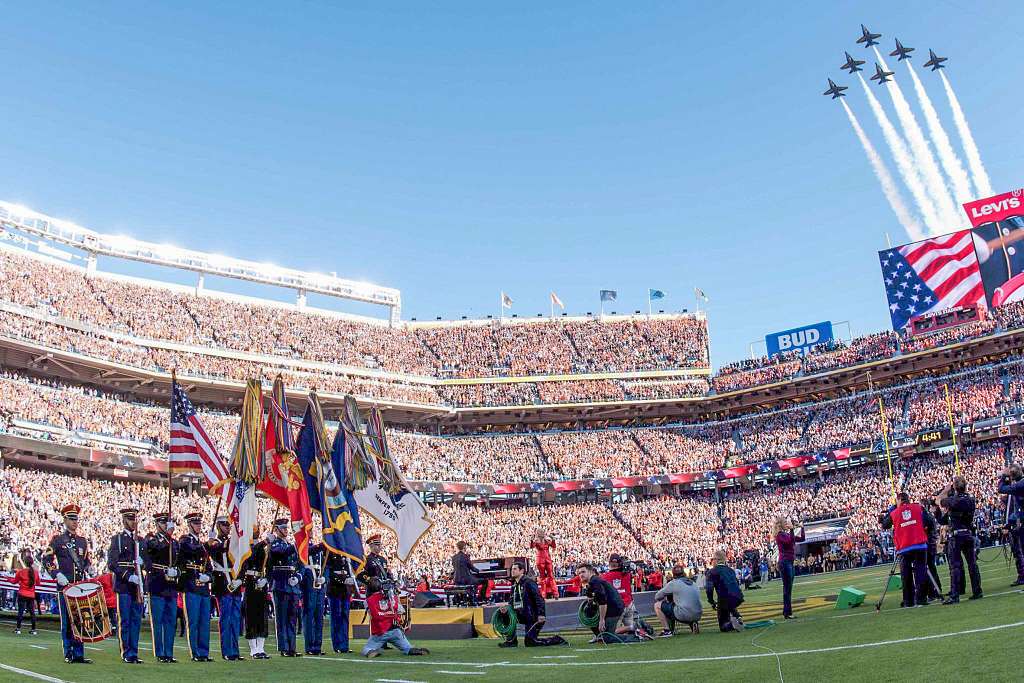
As Northwestern State University of Louisiana students across campus gathered to watch the Super Bowl LX, their reactions extended past the game’s outcome and into broader discussion about culture, representation and belief tied to one of America’s largest sporting events.
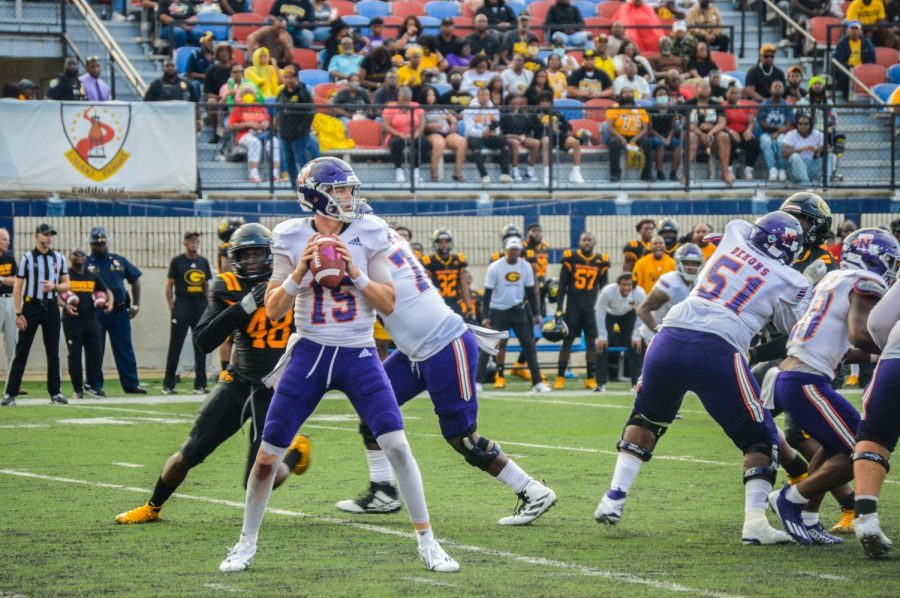
On Sunday, Feb. 10, the Seattle Seahawks defeated the New England Patriots 29-13 in the Super Bowl LX at Levi Stadium in Santa Clara, Calif. According to ESPN, this game marked the Seahawks’ second Super Bowl win after their last championship in 2014, where they defeated the Denver Broncos 43-8 at Super Bowl XLVIII. The Seahawks built an early lead and maintained it throughout the game, forcing turnovers and limiting the Patriots’ scoring opportunities.
Corey Morris, a sophomore fine arts graphic design student, said the moment that stood out to him the most was when the Seahawks linebacker Derick Hall stripped the ball from the Patriots quarterback Drake Maye. “This turnover occurred with the Seahawks leading 12-0 and led to a touchdown that extended their lead to 19-0, helping to secure the 29-13 victory,” Morris said.
Bryce Marler, a sophomore double major in computer information systems and communication, said he was rooting for the Seahawks and felt the outcome was clear early on in the game.
“I was not very surprised that the Seahawks won based on the first three quarters, it was not much of a nail biter,” Marler said.
For Adriana Chaj Hernandez, a junior radiologic technology student, this was the first Super Bowl she has ever watched.
“When the game ended I was surprised at how much I enjoyed the entire experience, especially since it was my first time watching the Super Bowl,” Chaj Hernandez said.
Chaj Hernandez explained that the half time show stood out to her most because it felt “powerful, emotional and deeply meaningful.”
Many students also shared opinions on the halftime show, which was headlined by Puerto Rican artist Bad Bunny. The performance featured appearances by artists such as Lady Gaga and Ricky Martin, along with celebrity cameos including Alix Earle, Cardi B, Pedro Pascal, Young Miko, Karl G and Jessica Alba, according to USA Today.
“I thought the halftime show was incredible and very touching, especially as a daughter of immigrants, because it gave recognition to the Latino community during a time when many hardships related to immigration have been occurring in this country,” Chaj Hernandez said. “It meant so much to me that I actually shed a few tears and it made the entire Super Bowl unforgettable.”
Hal Williams III, a sophomore communication major, said the halftime show stood out to him for cultural representation.
“I am a huge fan of Latin music and the culture behind it. Seeing cultural references on a stage that big was powerful, especially at a time when the representation is not always visible in the world,” Williams said. “The performance was special to me because it was not just entertainment, it was culture being celebrated.”
Marler explained his view that the performance was entertaining, but he struggled to connect with it.
“Not to culture shame, but I did not understand any of Bad Bunny’s halftime show,” Marler said. “It was entertaining, but I could not really enjoy it because I do not listen to Bad Bunny.”
In addition to the official Super Bowl halftime show, conservative organization Turning Point USA (TPUSA) hosted its own All-American Halftime Show as an alternative option for viewers who chose not to watch the official performance. The pre-recorded event aired on platforms such as Youtube and Rumble and featured rock and country artists such as Kid Rock, Brantley Gilbert, Lee Brice and Gabby Barrett.
Gracie Hale, a freshman Scholars’ College humanities and social thought major, is a member of NSU’s TPUSA chapter and said she preferred the All-American Halftime Show over the official performance.
“I believe that the TPUSA halftime show was a better showing of American values with a focus on artists who support American interests and a more Christian family-friendly atmosphere,” Hale said.
Hale said her preference was also included by accessibility for the audience.
“With the majority of Americans being English speaking, especially the NFL fanbase, I feel that an all-Spanish show was not the best decision,” Hale said. “I also believe that the making of the TPUSA halftime show was not done in malice toward Hispanic Americans or Spanish-speaking Americans. It was solely done in the interest of all Americans and America itself.”
Hale added that she felt that Bad Bunny’s performance displayed inappropriate lyrics and dancing as well as put up a language barrier for many English-speaking Americans that were tuning in.





Anonymous for safety • Feb 11, 2026 at 10:50 am
The TPUSA “halftime show” was such BS. Those who “enjoyed it” are racists. It included a pedophile as a headliner and it did NOT represent America as a whole. It represented the white supremacy’s version of America. Bad bunny is an American. His show wasn’t the best ever but it was American!!!!