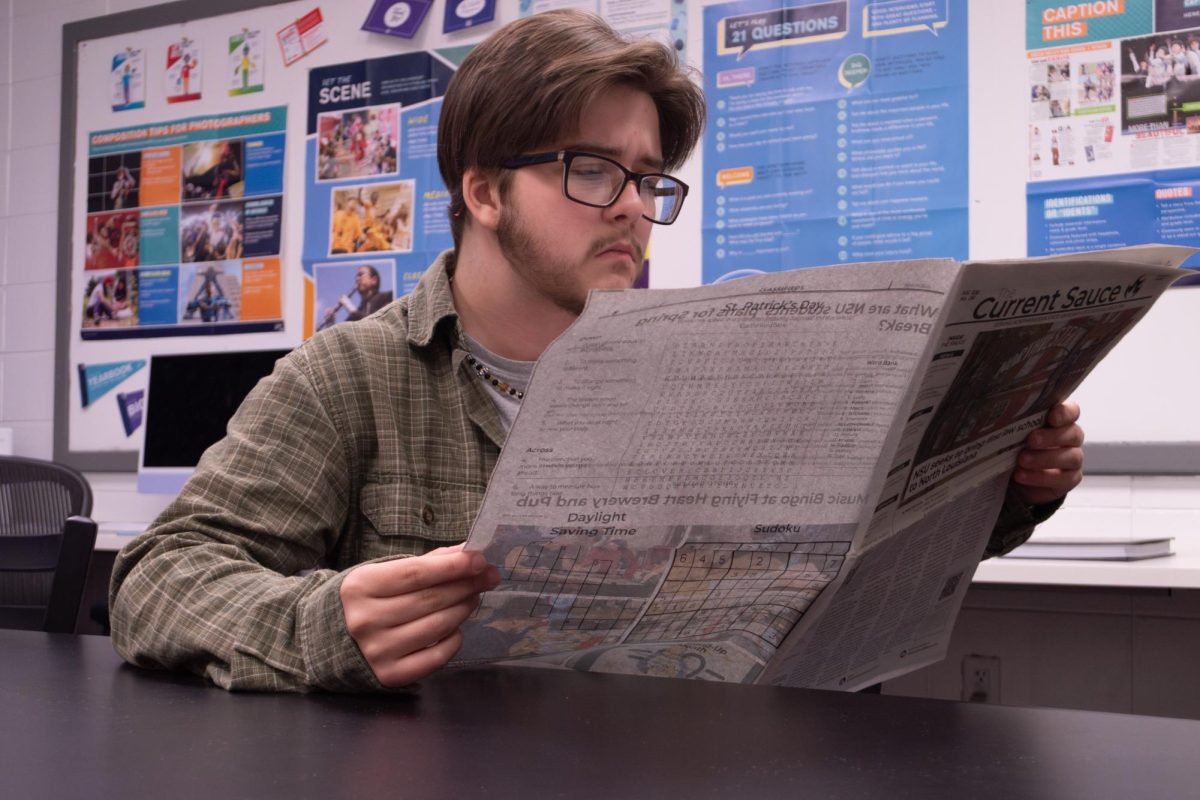









Between discourse about the “Gen-Z stare” and “dark Gen-Z humor,” one might get the impression that young adults these days are entirely miserable. How true is this? Does Generation-Z have a more pessimistic outlook on the world, and if so, why?
Gen-Z is the category for Americans born between 1997 and 2012, according to Encyclopedia Britannica. Generational groupings are a useful lens through which to view recent history; the defining cultural experiences shared by those within a generation lead to trends in their belief systems and behavior.
The consensus from our elders seems to be that Gen-Z is a problematic bunch. According to a Gallup poll, Americans are not optimistic about Gen-Z’s success in the future. In fact, “Americans have as little optimism as they have had at any time in nearly three decades about young people’s chances of having greater material success in life.”
Employers find Gen-Z difficult to work with due to negative attitudes and disrespectful tendencies. A survey by Intelligent Magazine found that 27% of surveyed managers would avoid hiring Gen-Z employees if possible, due to issues such as “poor work ethic” and “lack of professionalism.”
However, young adults deny the claim that Gen-Z is more negative. Students at Northwestern State University of Louisiana believe that the stereotype of misanthropic Gen-Z-ers is a complete misunderstanding.
“There is a wide diversity of opinions,” Aaron Fletcher, a sophomore English major, said. “I don’t know if there’s actually more who are pessimistic, but I think that they make their voices more loudly heard.”
Some students believe that the behavior of young people on the internet warps public perception of our generation.
“Based on how people act online, they seem more miserable, but in person, you hear anecdotally that most people are optimistic,” Jared Cole Becton, a senior musical theatre major, said. “I am an optimist!”
Music professor Adam Hudlow does not consider himself an optimist in general, but is specifically an “optimist for Gen-Z.” He believes that Gen-Z’s negative attitude may not be true pessimism, but rather a heightened awareness of world events and a productive concern with the state of society.
“You are just better informed than I ever was at your age,” Hudlow said. “You’re better connected. You are able to see countercultures and resistances better than anybody was ever able to, so you can make better informed choices … we [Millenials] are going to die sadder than our parents, but I don’t think you guys are.”
Perhaps the negativity of Gen-Z is a reasonable reaction to the common experiences of the age group. Our formative years are still being impacted by the effects of the COVID-19 pandemic. While the general public no longer has constant fear of the virus itself, the cultural impact of the pandemic was severe. The same is true for violent incidents around the country that we have been keenly aware of.
“There is definitely a lot of nihilism,” Louise Guy, a sophomore liberal arts major, said. “For one because of COVID, and all the stuff that happened to us before we were even able to do anything. We don’t remember a time before we had, like, school shooting drills that we had to be afraid of. We just deal with it through dark humor.”
Gen-Z is just reaching adulthood. It is impossible to say for certain how our generation will impact the world, because we are just beginning. Older generations have always been skeptical of the abilities of the youth, but there are always some people who see our potential and want to encourage us.
“If the world is burning, Gen-Z is gonna be the people with the fire extinguisher,” Hudlow said. “At least my Gen-Z-ers that I know.”
The outlook of Gen-Z is distinct from past generations. Due to our experiences growing up in the technological age, we see the world differently. Increased access to information leads some people to develop a pessimistic attitude, but as a whole, Gen-Z may not be as hopeless as some sources say. Our unique perspective is our strength.