

Many people share the sentiment that popular culture is not as enjoyable as it once was, but opinions differ about why. There are several factors contributing to a perceived lack of quality in new art. I think an often overlooked factor is the role of parasocial connection.
Public figures, whether they are musicians, dancers, models, athletes or online personalities, cannot simply do their jobs; their success hinges on the curation of an “identity” that fans can relate to, be attracted to and become attached to. The illusion of personal connection to these figures has the potential to warp fans’ view of reality, hurt the artist’s mental health and damage the quality of their work.
“Parasocial” was the Cambridge Dictionary’s word of the year in 2025. It describes a one-sided relationship between a viewer and their preferred celebrity/character on-screen. Coined in 1956 to describe how viewers connected to television stars, the phenomenon of parasociality has become more significant over time. As more and more of our social lives are centered around the digital world, parasociality bleeds into everyone’s daily experience.
Social media is an intrusive eye that peers into every corner of our lives. We have internalized this and become accustomed to it. There is an unspoken social contract online: we share details about our lives, and we expect others to share in return. This is not inherently evil, but it is something we must handle delicately. We must discern carefully what parts of ourselves we share on the internet.
However, the culture of parasociality creates a sense of entitlement to others’ lives. As viewers and consumers, this hurts the way we interact with human beings. We become frustrated when we aren’t “caught up.” We can forget the humanity of others when we engage with their lives primarily through a screen. We conflate real people with characters for our entertainment, and we conflate celebrities with friends because we interact with all these people through the same digital avenues.
The normalization of constant access to others’ lives changes how we engage with art. There was a time when art could be vulnerable and intimate while still being separate from an artist’s personal life. However, for those whose lives are in the public eye, art can be reduced to a parasocial peek into a celebrity’s inner world.
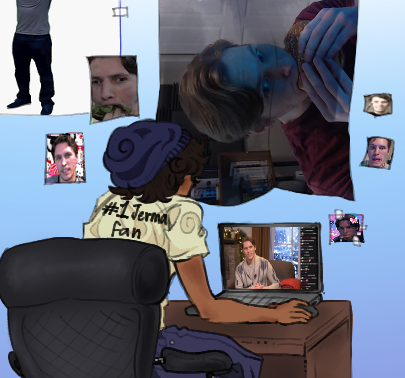
Digital content creators have an especially difficult situation to maneuver. The version of identity presented in online content is a performance, but this is hard to grasp as a viewer. The expectation to uphold this performance full time can lead to burning out. For example, Twitch personality Jerma985 made many live streams involving video games, comedy and performance art; each stream being several hours in which fans have a constant gaze into his life and behavior. After 13 years, the constant labor to uphold the expectations of fans led him to “retire” from live-streaming in favor of less intimate forms of content.
When fans get too close, artists have to push back. Sometimes this means changing how they make art, or taking a break entirely. We feel close to the creatives whose work we enjoy, but our sense of entitlement to creators’ personal lives ends up driving us farther away from them.
Artists with large fanbases cannot simply create—they have to consider the personal implications of everything they say and do. If you had to worry about thousands of people trying to look into your private life, would you create as boldly? Would you take as many creative risks?
Back in 2024, singer Chappell Roan addressed parasociality within her fanbase in a TikTok video: “I don’t care that this crazy type of behavior comes along with the job, the career field I’ve chosen. That does not make it okay … It’s weird how people think that you know a person just ‘cause you see them online or you listen to the art they make.”
When people believe that the content they consume reflects the identity of its creator, everything symbolizes something. Everything becomes a “clue” into the mystery of a stranger’s life. The anxiety caused by a parasocial culture harms how artists do their jobs.
This is not to put the blame entirely on the consumers. Social media is designed to create these warped perspectives, and believing you are best friends with celebrities keeps you on the apps longer. Sometimes, artists will even play into parasocial connections to increase their popularity and profit. However, as people who enjoy art, we should be critical of this trend. Let’s remember the humanity of artists and treat others as we want to be treated.