





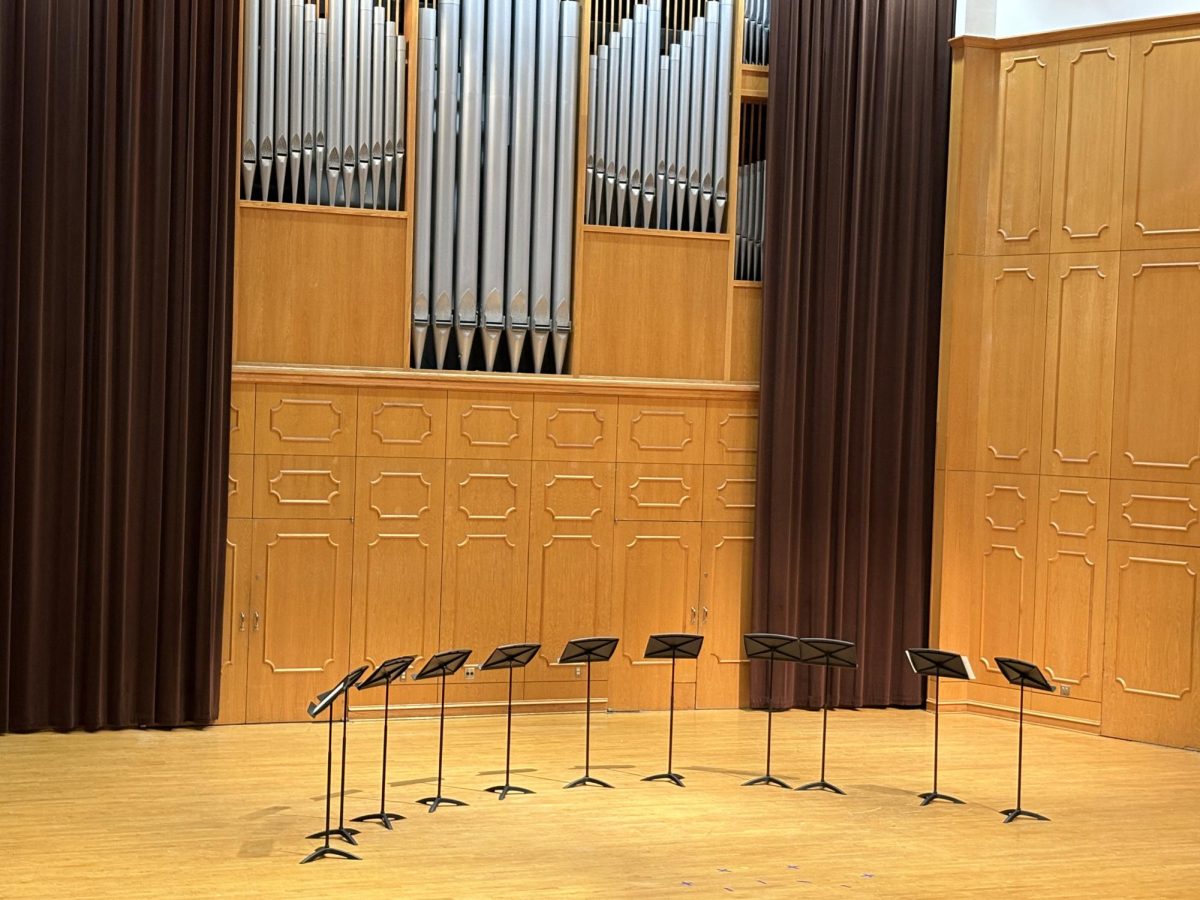
The true dynamic potential of the saxophone was featured at Northwestern State University of Louisiana in the NSU Saxophone Studio Recital on Feb. 26. This performance paid homage to artists from various cultural backgrounds while training the participants on proper technique in preparation for their trip to the Biennial North American Saxophone Alliance Conference on March 12 through March 15.
The saxophone has a rich history, but a shortened one compared to other musical instruments. Paul Forsyth, professor of saxophone, gave a shortened version of this history, noting that while the instrument was made in the mid 19th century, the saxophone had to gain acceptance in what is known as the classical genre. The normal connotation of classical—noting the period from which the music came—isn’t the interpretation of the term in this case, but is used to differentiate it from the more commonly associated jazz alternative.
The recital was organized into various soloists with different timbre instruments, including soprano, alto, tenor and baritone, as well as two different quartets and a grand saxophone symphony to end the night. This performance was directed by Forsyth and Hayden Hirons, a graduate assistant and sophomore saxophone performance major.
“One thing that I think is special about this concert specifically is that this one was primarily student-led,” Hirons said.
Hirons explained that all the pieces for performances, venues and program-specific details are typically picked by the director. In this case, however, the venue booking and training of the two quartet groups were Forsyth’s two primary contributions, while the rest was handled by students.
Forsyth acknowledges this independence and the sheer effort of the students. “This concert is a culmination of their hard work,” he said.
All the pieces selected by students for the evening showcased non-white or non-male artists with a contemporary genre, aside from one that leaned closer to jazz. The intention behind the symbolism of the pieces played combined with the preparation and discipline that the performers displayed was truly astounding to witness firsthand.
On a certain level, this astonishment can partially be attributed to the idea that it is just saxophones playing, which many could view as rudimentary or lacking depth. However, as best described by Ashton Milam, a freshman music education major and a member of the “Quartet” quartet, “We usually don’t even get the melody, and it’s especially not typical to get a full song in advance, so you really got to see a showcase of what the saxophone can do!”
The sense of depth portrayed by one instrument type in different timbres is remarkable. Various audience members described the performances as “intriguing,” “peaceful,” “brilliant” and “incredible.”
Hirons and River Jekel-Chavez played the piece “Long Shadows” (1992) by Meredith Monk, arranged by Hirons. This piece was beautiful and impactful. It transcends from music to life, describing an almost liminal space and the poetic venture from one place in life to another. It begins very slowly, as if tiptoeing in hesitation, which was, on some level, reminiscent of leaving home for college. The piece’s teetering sway of this somber contemplation of a decision of sorts is truly the pinnacle of the human experience.
Tim Pursell played the piece called “Mai” (1978) by Ryo Noda, which he noted was based on a poem. This piece was utterly unique in the sense that it was unexpected to be played on a saxophone. The techniques demonstrated were noted to attempt to mimic that of a bamboo flute.
The poem includes a justification from a samurai to his wife on why he has to leave home to fight, the internal conflict of the soldier in the midst of his enemies’ deaths and the regret of leaving the one he loves behind. His inevitable death at the end was marked by ten seconds of silence. The breathy mountainous landscape that is crafted, coupled with this deep message about the self-destructive nature of regret in conglomeration with honor, was hauntingly beautiful and prevalent in today’s political climate.
Though every piece was amazing in its own right and could inspire many more compliments, the finale blew everything out of the water. “Jarba, Mare Jarba” (2018) by Stacy Garopp was played as a saxophone choir, with a total of 14 saxophones playing at once.
This piece was such a juxtaposition within itself, and its execution was sublime. Knowing that 14 people were playing at once, telling a story without mayhem and unsynchronization, is awe inspiring. One wouldn’t know that many performers were playing without the program confirming it—they were that in sync.
The meaning of “Jarba, Mare Jarba” stems from the theme of sad nostalgia for one’s home. The jolly, almost dancing pub music is juxtaposed with a slowed tempo and melancholy notes. This reflects a longing for home and the heartache that one can’t return that is meant to be interpreted by the audience.
The ratio of happier moments to solemn ones within the piece was quite interesting. There were much longer durations of bustling, vivid and happy connotations of the music than the sad ones. This subtly divulges how, in life, we should focus on the positive moments to recover from more solemn ones. The melancholy debate and longing for something you want but can’t have is part of the human experience, but once you become reflective and separate the good from the bad, you can have fond memories without being consumed by the negative.
Every piece of the night overflowed with passion. This combination of the passion from the piece writers and the passion that these talented students had for their conference fueled the music, giving it soul. This passion was electric in these quartets, soloists and saxophone choir, and will be carried with them through the duration of their conference.
The following performers were featured in the Saxophone Studio Recital, performing their hearts out and giving an unforgettable concert: Hayden Hirons, Collin Skinner, Tim Pursell, River Jekel-Chavez, Colin Stevens, Juan Padilla, Alexis Bauder, Macie Purvis, Jarret Thomisee, Ryleigh Riggs, Piper Adams, Ronald Turizo, Josh Bouriaque and Ashtyn Milam.



Ashtyn Milam • Mar 1, 2026 at 2:57 pm
Thanks for writing over our saxophone recital!! We’re so glad you enjoyed the recital as I’ve enjoyed reading your article! Thanks!!