
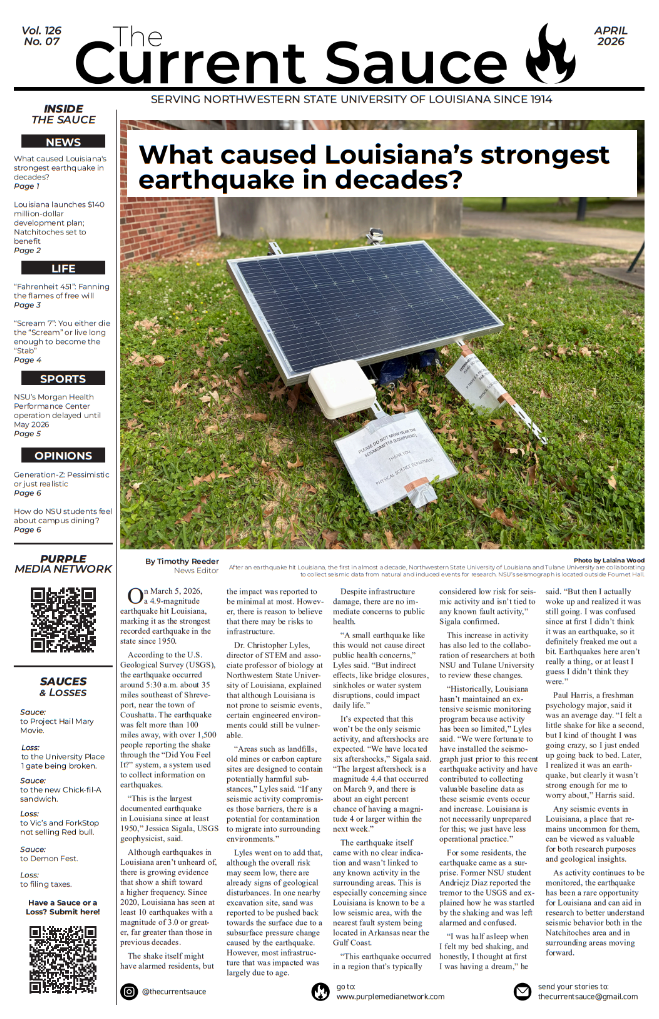




















On March 5, 2026, a 4.9-magnitude earthquake hit Louisiana, marking it as the strongest recorded earthquake in the state since 1950.
According to the U.S. Geological Survey (USGS), the earthquake occurred around 5:30 a.m. about 35 miles southeast of Shreveport, near the town of Coushatta. The earthquake was felt more than 100 miles away, with over 1,500 people reporting the shake through the “Did You Feel It?” system, a system used to collect information on earthquakes. “This is the largest documented earthquake in Louisiana since at least 1950,” Jessica Sigala, USGS geophysicist, said.
Although earthquakes in Louisiana aren’t unheard of, there is growing evidence that show a shift toward a higher frequency. Since 2020, Louisiana has seen at least 10 earthquakes with a magnitude of 3.0 or greater, far greater than those in previous decades.
The shake itself might have alarmed residents, but the impact was reported to be minimal at most. However, there is reason to believe that there may be risks to infrastructure.
Christopher Lyles, director of STEM and associate professor of biology at Northwestern State University of Louisiana, explained that although Louisiana is not prone to seismic events, certain engineered environments could still be vulnerable.
“Areas such as landfills, old mines or carbon capture sites are designed to contain potentially harmful substances,” Lyles said. “If any seismic activity compromises those barriers, there is a potential for contamination to migrate into surrounding environments.”
Lyles went on to add that, although the overall risk may seem low, there are already signs of geological disturbances. In one nearby excavation site, sand was reported to be pushed back towards the surface due to a subsurface pressure change caused by the earthquake. However, most infrastructure that was impacted was largely due to age.
Despite infrastructure damage, there are no immediate concerns to public health.
“A small earthquake like this would not cause direct public health concerns,” Lyles said. “But indirect effects, like bridge closures, sinkholes or water system disruptions, could impact daily life.”
It’s expected that this won’t be the only seismic activity, and aftershocks are expected. “We have located six aftershocks,” Sigala said. “The largest aftershock is a magnitude 4.4 that occurred on March 9, and there is about an eight percent chance of having a magnitude 4 or larger within the next week.”
The earthquake itself came with no clear indication and wasn’t linked to any known activity in the surrounding areas. This is especially concerning since Louisiana is known to be a low seismic area, with the nearest fault system being located in Arkansas near the Gulf Coast.
“This earthquake occurred in a region that’s typically considered low risk for seismic activity and isn’t tied to any known fault activity,” Sigala confirmed.
This increase in activity has also led to the collaboration of researchers at both NSU and Tulane University to review these changes.
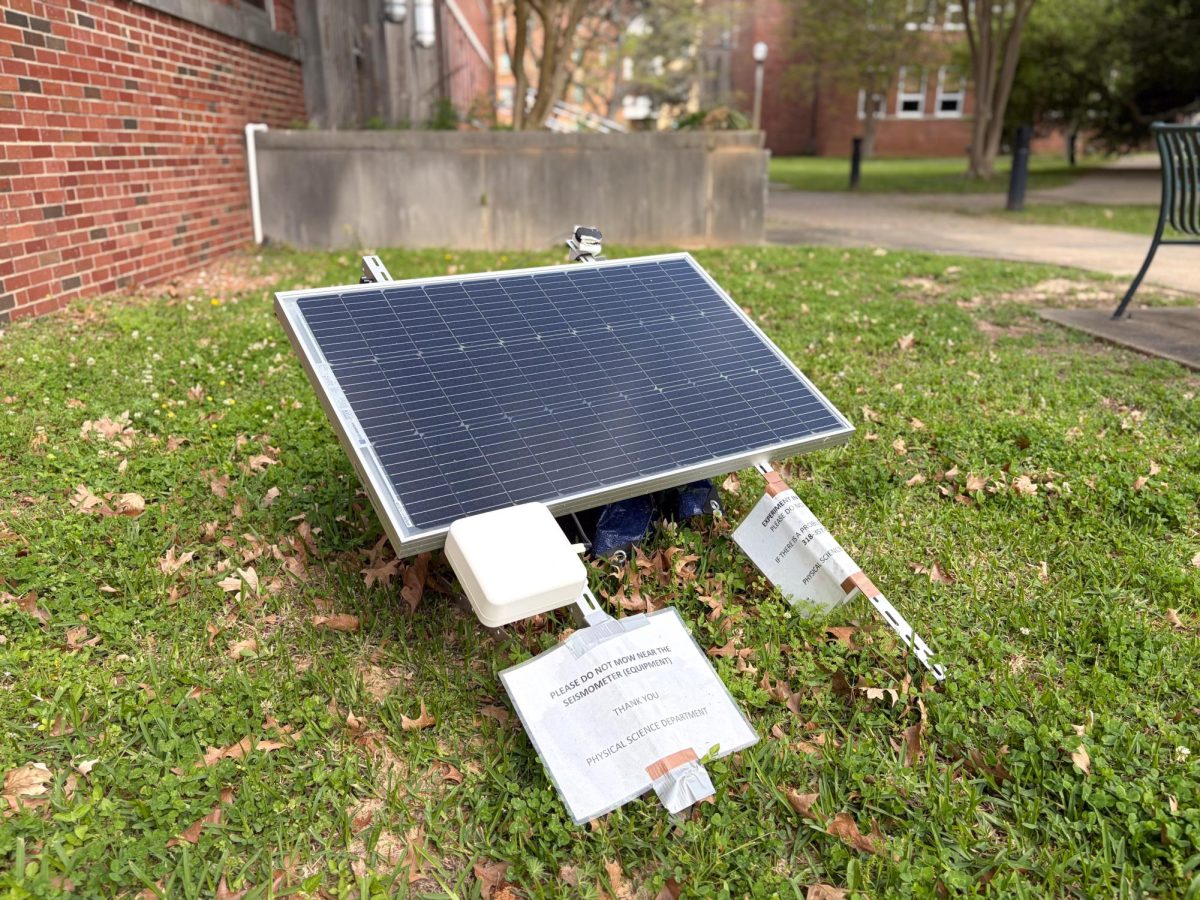
“Historically, Louisiana hasn’t maintained an extensive seismic monitoring program because activity has been so limited,” Lyles said. “We were fortunate to have installed the seismograph just prior to this recent earthquake activity and have contributed to collecting valuable baseline data as these seismic events occur and increase. Louisiana is not necessarily unprepared for this; we just have less operational practice.”
For some residents, the earthquake came as a surprise. Former NSU student Andriejz Diaz reported the tremor to the USGS and explained how he was startled by the shaking and was left alarmed and confused.
“I was half asleep when I felt my bed shaking, and honestly, I thought at first I was having a dream,” he said. “But then I actually woke up and realized it was still going. I was confused since at first I didn’t think it was an earthquake, so it definitely freaked me out a bit. Earthquakes here aren’t really a thing, or at least I guess I didn’t think they were.”
Paul Harris, a freshman psychology major, said it was an average day. “I felt a little shake for like a second, but I kind of thought I was going crazy, so I just ended up going back to bed. Later, I realized it was an earthquake, but clearly it wasn’t strong enough for me to worry about,” Harris said.
Any seismic events in Louisiana, a place that remains uncommon for them, can be viewed as valuable for both research purposes and geological insights.
As activity continues to be monitored, the earthquake has been a rare opportunity for Louisiana and can aid in research to better understand seismic behavior both in the Natchitoches area and in surrounding areas moving forward.