












As Northwestern State University of Louisiana prepares for a transition of new student leaders, incoming Student Government Association (SGA) members will focus on improving communication, campus safety and student engagement for the Fall 2026 semester.
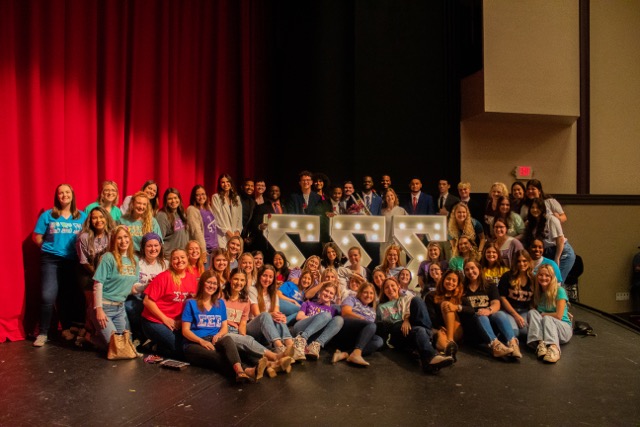
Kieler Soape, a junior business administration and management major and incoming SGA president, will officially assume office on Wednesday, April 15 at the Student Experience Banquet alongside vice president-elect Ardyn Jardell and treasurer Maddie Boutte.
Academic senators include Camilia Adgar, Raymond Bailey and Nick Robinson, College of Arts and Sciences; Denae Davis, Adian Matthews and Logan Sneed, College of Business; Travis Rachel, Lalaina Wood and Jenianne Chase, College of Education and Human Development; Chloe Cloessner, Rachel Wagoner and Amber Bledsoe, College of Nursing and Allied Health; and Faith Miller, Gracie Ross, Aniyah Smith and Kaylee Ann Stacy, Senators-at-Large.
Although the transition is not yet official, Soape is already planning to ensure a smooth start, adding that the administration’s priority is to align itself with the incoming cabinet members and to build a foundation for future initiatives before the fall semester.
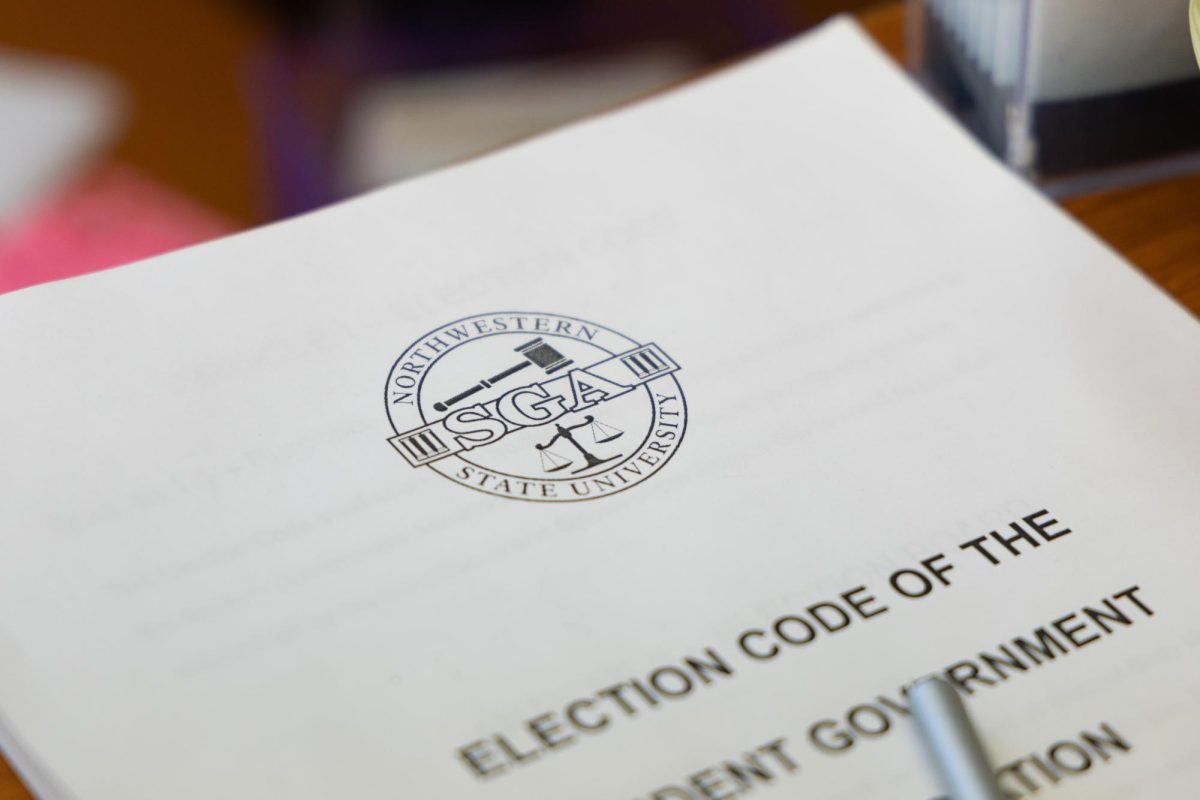
This transition is overseen by the Office of Student Activities and Student Affairs. Yonna Pasch, the director of Student Activities and Student Affairs, said her office ensures fairness and transparency throughout the election process.
“I check the eligibility of those wanting to run and build the election system,” Pasch said. “I also work with the election board to review election policies and verify results.”
Pasch said there are built-in safeguards to maintain integrity, one of which is preventing election board members from appearing on the ballot and requiring a majority of votes for internal decisions. However, overall student involvement in elections varies each year and any outreach efforts are adjusted accordingly.
“Self-governance is important,” Pasch said. “Students should have a say in the decisions that directly affect their experience.”
Student concerns are at the forefront for Soape, and acknowledging and addressing issues remains a focus for his administration. He said students often feel unheard when issues are raised but not followed up on. “Often, students raise an issue, and it just vanishes,” Soape said. “Even if the university has to say ‘no,’ we want to go back to students and explain why and what we tried to do.”
With this approach, he hopes to build trust and better transparency between students and SGA, suggesting that student input is taken seriously.
Campus safety is another priority, particularly in areas with heavy foot traffic on- and off-campus, such as the crossings between Second Street and Central Avenue. Soape plans to develop a solution that is research-backed rather than a short-term fix.
“It’s a daily concern for students,” Soape said. “We want to address it by putting together a well-researched plan and bringing solutions to the [university] administration.”
SGA also wants to explore campus beautification, one area being the campus columns. While no official plan has been released, discussions are underway with university administration. With these plans not being official, Soape doesn’t want to make immediate promises, but would rather look at realistic options and use those to build partnerships with students and staff.
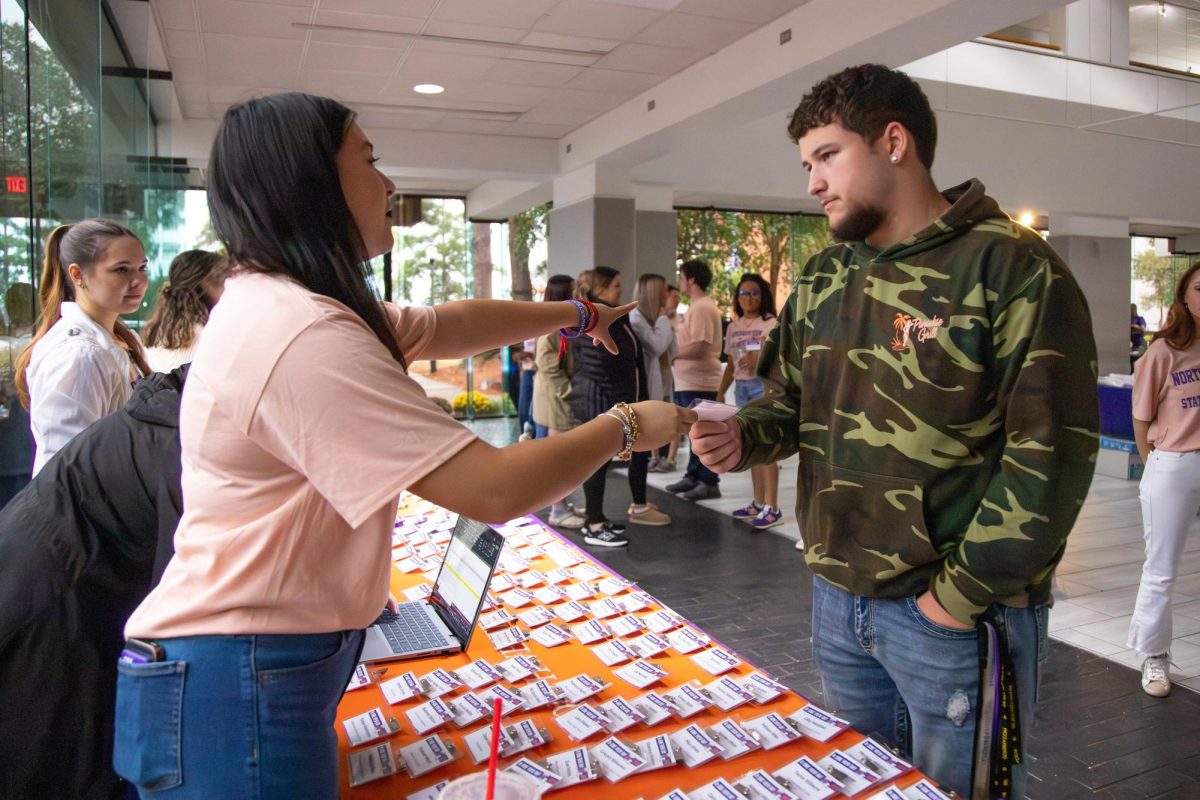
Beyond just physical improvements, increasing SGA visibility and access remains another priority. Many students are still unaware of the organization and the role it plays on campus. This creates a disconnect between students and how their concerns are represented.
Aaron Blood, a freshman criminal justice major, said he often doesn’t know or understand what SGA does. With little information spread around, it’s hard for some students to see why they’re important or feel involved. “A lot of students don’t really know what SGA does or how they can help,” Blood said. “Maybe if they tried to put themselves out there, I could see more students actually caring.”
Soape said that improving social media outreach and building a stronger overall presence on campus will hopefully bridge the gap and make SGA more approachable to students.
Pasch said that student participation is an ongoing effort, with outreach through student organizations, social media and direct communication among students. Pasch emphasized that an effective student leader must actively engage with their student peers.
“An effective student government leader is diplomatic, genuinely represents the student voice and isn’t afraid to go directly to students and ask questions,” Pasch said.
As the new administration prepares to take office, Soape’s goal is to produce measurable results that students can see in their daily campus experience. “I just want students to feel that we truly went to work on their behalf,” he said. “I want them to be able to point to real improvements and know we made a difference.”