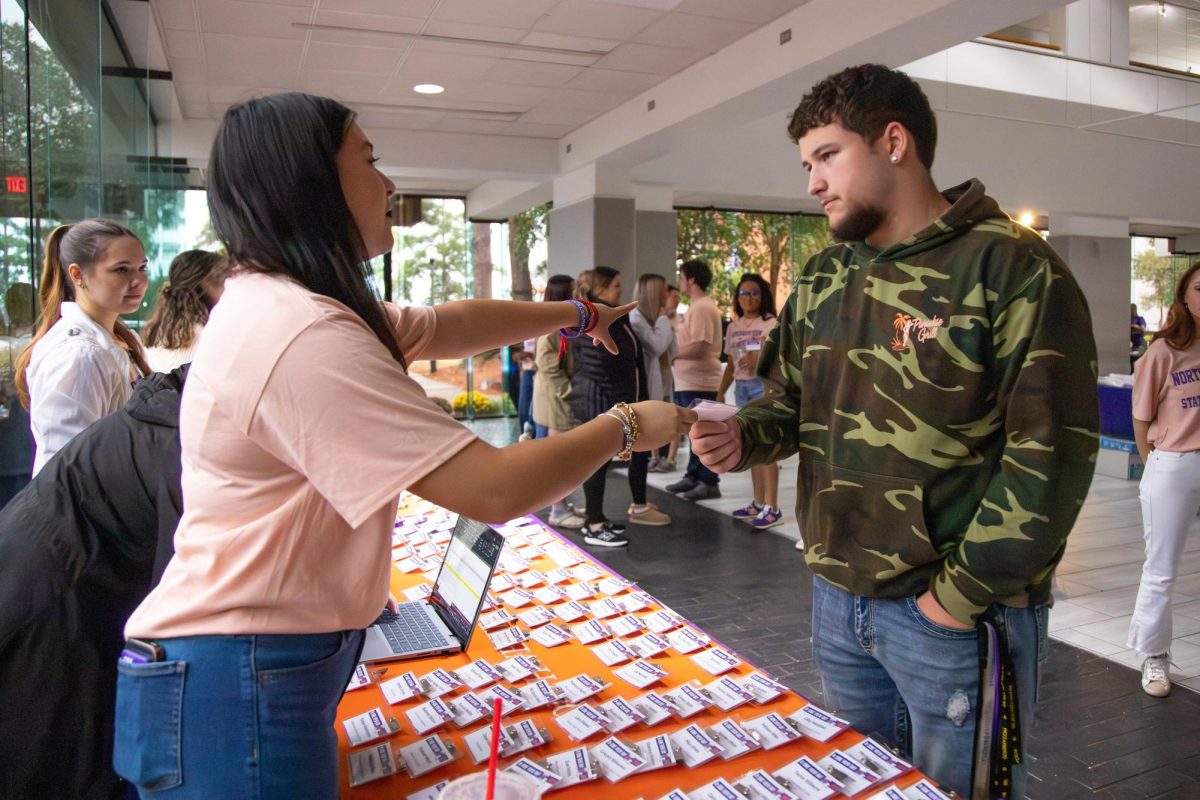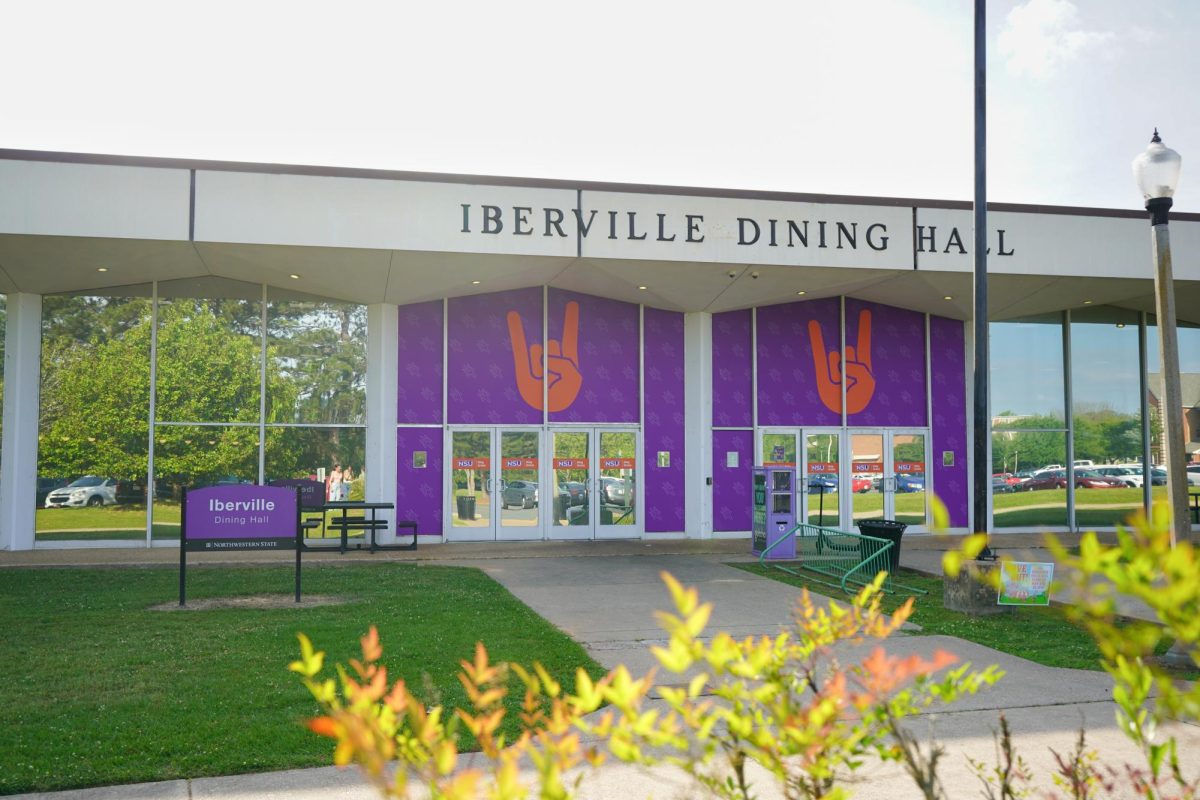





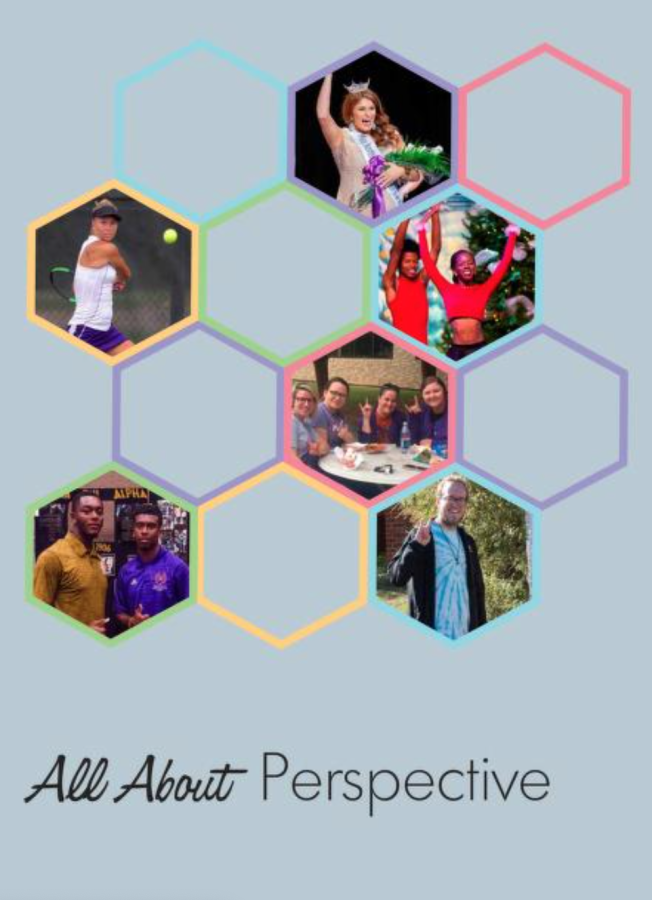










Northwestern State University of Louisiana students are playing an increasing role in shaping the campus by influencing decisions that range from academic policies to infrastructure. Through surveys, groups and student initiatives, student input is becoming progressively more prominent when it comes to decision-making at NSU.
However, not all students feel that their voices are always represented.
Kenzie Hall, a sophomore biology major, shared how she feels her voice sometimes isn’t represented with certain issues and how some student perspectives aren’t considered. “At times, it feels like the school just does things and doesn’t really notify people. Such as adding Turning Point USA or the change with co-ed dorming,” Hall said. “For lots of students, it doesn’t feel like we get a vote on these additions and changes.”
Other students, though, would argue otherwise. Paul Harris, a freshman psychology major, feels more than heard. Harris mentioned that he always hears requests for student feedback, and that he’s able to freely speak with support systems on campus at any time. “There are many times where people would ask if you needed help with anything, and described how support and services are always there,” Harris said. “It makes me believe that I have a safe space to go to, and I can believe in the people I speak to and feel that my voice is represented as a student.”
Student Government Association president Madysen Morgan, a senior business administration major, mentioned how students often underestimate the power that their voices hold.
“I truly believe students have a very powerful voice on campus, but they don’t realize how much of an impact their voices can make,” she said. “There are so many ways for students to voice their concerns.” Morgan pointed to weekly SGA meetings as one means of sharing opinions or issues.
Reatha Cox, vice president for Student Experience and dean of students, said students’ voices play a major role in determining the direction of the university.
One main tool used to collect data is the Student Satisfaction Inventory, which usually takes the form of surveys released multiple times throughout semesters. Cox said it’s a way to allow students to share the good and the bad when it comes to academic advising, campus safety and general campus life.
While students often feel this data may be ignored, Cox strongly disagrees. Both she and other faculty spend many hours reviewing written comments by students. Student feedback sometimes directly leads to improvements, such as upgrades concerning internet access or a relocation of a student service.
“Students mentioned the slow internet in the dorms, so what did we do? We fixed it by partnering with housing,” Cox said. “Students also said they didn’t like how the career center was hard to find or see, so we moved it to a more visible area.”
Student voices are represented throughout the campus by committees. Cox said students serve on a wide variety of committees, including academics, food service and campus safety.
“We want students at the table,“ Cox said. “Those most affected by institutional decisions and policies must have a seat at the table.”
Student feedback has also led to safety improvements on the campus. Cox mentioned how students were disappointed by a lack of mental health awareness, so it was implemented through courses like University Experience, an initiative initially drafted by students in SGA. This later led to the creation of the NSU safety portal and other reporting apps to offer more campus safety tools.
Yonna Pasch, director of Student Affairs, said student voices heavily influence campus events. Outside of Student Affairs, Pasch oversees a number of out-of-classroom activities, including student organizations and support services.
According to Pasch, student engagement and feedback are collected after every event, normally through a post-event survey. “If students don’t bring it to our attention, we’re likely not going to think about it,” Pasch said. “So when they tell us, we adapt.”
Pasch recounted a specific instance where a student’s feedback led to an immediate change. After a major campus event, a student said there were no handicapped accessible portable restrooms available for them. Since that experience, they’ve been added to every public event.
Despite student concerns, both Cox and Pasch acknowledge that feedback doesn’t always result in a quick change, especially regarding decisions that are limited by policies, funding or state regulations. That, however, does not mean student feedback is not considered.
“Policy drives a lot of decisions,” Cox said. “But when students go through the right channels, we’re going to hear them.”
While avenues for giving feedback already exist, Morgan explained how uncertainty could prevent a lot of students from speaking up.
“Not knowing where to go or how to bring concerns up makes it incredibly difficult,” she said. “Approachability can be the difference in whether a student feels comfortable sharing what’s going on.”
Morgan also emphasized that change cannot happen instantly.
“Throughout my time at Northwestern, I’ve learned that true change is intentional,” she said. “Things don’t always change overnight, but if you thoughtfully bring your concerns to the right people, your impact can be huge.”
Pasch also touched on a different challenge surrounding student engagement, particularly because of social media and the rise of technology. While it can be easier to provide information, it’s more difficult to create those connections with students and reach out to them.
“It’s a double-edged sword,” Pasch said. “We want students to step out from behind the screens and be part of the college experience.”
Despite these obstacles, Cox and Pasch said student involvement is one of the university’s strongest assets. One example that both mentioned was the development of the Wellness, Recreation and Activity Center, explaining how the original idea, and even the overseeing of the construction, was led by students who were thinking beyond their time on campus.
“That building exists because of our students,” Pasch said. “They were willing to think beyond their four years.”
Pasch gave this example to encourage students to use their voice and take advantage of the change they can make. “You are your best advocate,” Pasch said. “If you don’t use your voice, then change cannot happen.”
Cox shared the same encouragement to students hoping to shape the future of the campus. “We want to treat our students not just as learners, but as partners,” Cox said. “It takes all of us.”
As NSU continues to grow, student voices will remain the driving force behind creating change. Student voices help define what makes NSU the university that it is. While challenges and limitations may exist, students are encouraged to use their voices and carve out change for what they want NSU to be.
As Morgan said, “Real change begins with a sentence.”